In fifteen years of surveying properties across Watford and Hertfordshire, damp is consistently one of the top three issues we find. And yet it's also one of the most misunderstood — by buyers, sellers and even some estate agents.
This guide from our RICS surveyors will help you understand the different types of damp, how to spot them, what causes them and — critically — how much they cost to fix. Because the difference between a manageable damp issue and a property you should walk away from often comes down to understanding what type of damp you're dealing with.
🔑 Key Takeaways
- There are three main types of damp: rising damp, penetrating damp and condensation
- Condensation is very common and usually cheap to address
- Rising damp and penetrating damp can be expensive — but are not always as serious as they look
- A RICS survey will always include damp testing with a moisture meter
- Never buy a Watford or Hertfordshire property without an independent damp survey
Why Is Damp So Common in Watford Properties?
Watford has a lot of older housing stock — Victorian terraces, Edwardian semis and interwar properties make up a significant proportion of the town's residential market. These older buildings were built using construction methods that simply aren't as weatherproof as modern ones. Original damp proof courses (DPCs) were often made from slate or bitumen — materials that can degrade over 100 years. Gutters, downpipes and rainwater disposal were designed for a different era.
Add to this the fact that many Watford properties have been extended, altered and renovated multiple times over the decades — often without proper attention to damp prevention — and you have a recipe for widespread moisture problems.
The Three Types of Damp — Explained Simply
1. Rising Damp
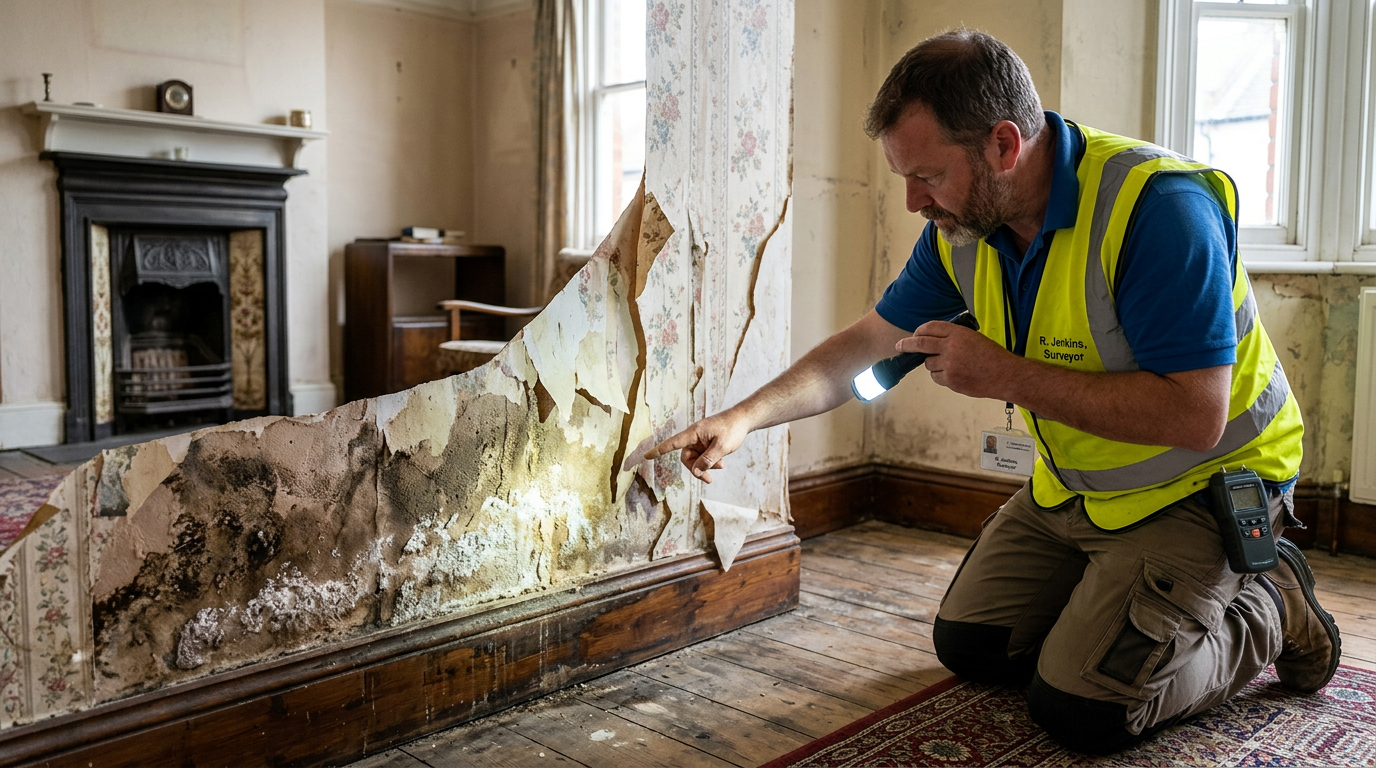
Rising damp occurs when groundwater rises up through a wall or floor by capillary action — basically, the wall acts like a wick. It's typically confined to the lower sections of walls, rarely rising above about one metre from ground level. Tell-tale signs include:
- Tide marks on lower walls (a brownish stain at a certain height)
- White salt crystallisation (efflorescence) on the wall surface
- Damaged plaster — crumbling, soft or hollow-sounding
- Peeling wallpaper or paint at low level
Cost to fix: £2,000–£6,000 for a typical treatment including a new chemical DPC and replastering. However, some contractors will try to oversell the severity of rising damp — always get a second opinion from an independent surveyor before committing to expensive remedial work.
2. Penetrating Damp
Penetrating damp is caused by water getting in through the fabric of the building — through a leaking roof, defective pointing, blocked gutters, cracked render or failed window seals. Unlike rising damp, it can occur at any height and often follows the path of the water source.
- Damp patches on walls or ceilings that appear after rain
- Damp patches around window frames or chimneys
- Staining or discolouration that follows the profile of the roof above
Cost to fix: Highly variable. Fixing a failed chimney flashing might cost £500. Repointing a whole elevation of Victorian brickwork could be £5,000–£15,000. The key is identifying and fixing the source — not just treating the symptom.
3. Condensation
Condensation is by far the most common form of damp in Watford homes, and fortunately it's usually the most straightforward to address. It happens when warm, moist air meets a cold surface. Modern homes are often worse affected because they're better insulated and less draughty — meaning moisture has nowhere to go.
Signs of condensation include black mould (particularly in corners, on north-facing walls and around windows), streaming windows, and a musty smell. In most cases, improving ventilation and heating is sufficient. A whole-house mechanical ventilation system costs around £800–£1,500.
What Does a Surveyor's Damp Check Involve?
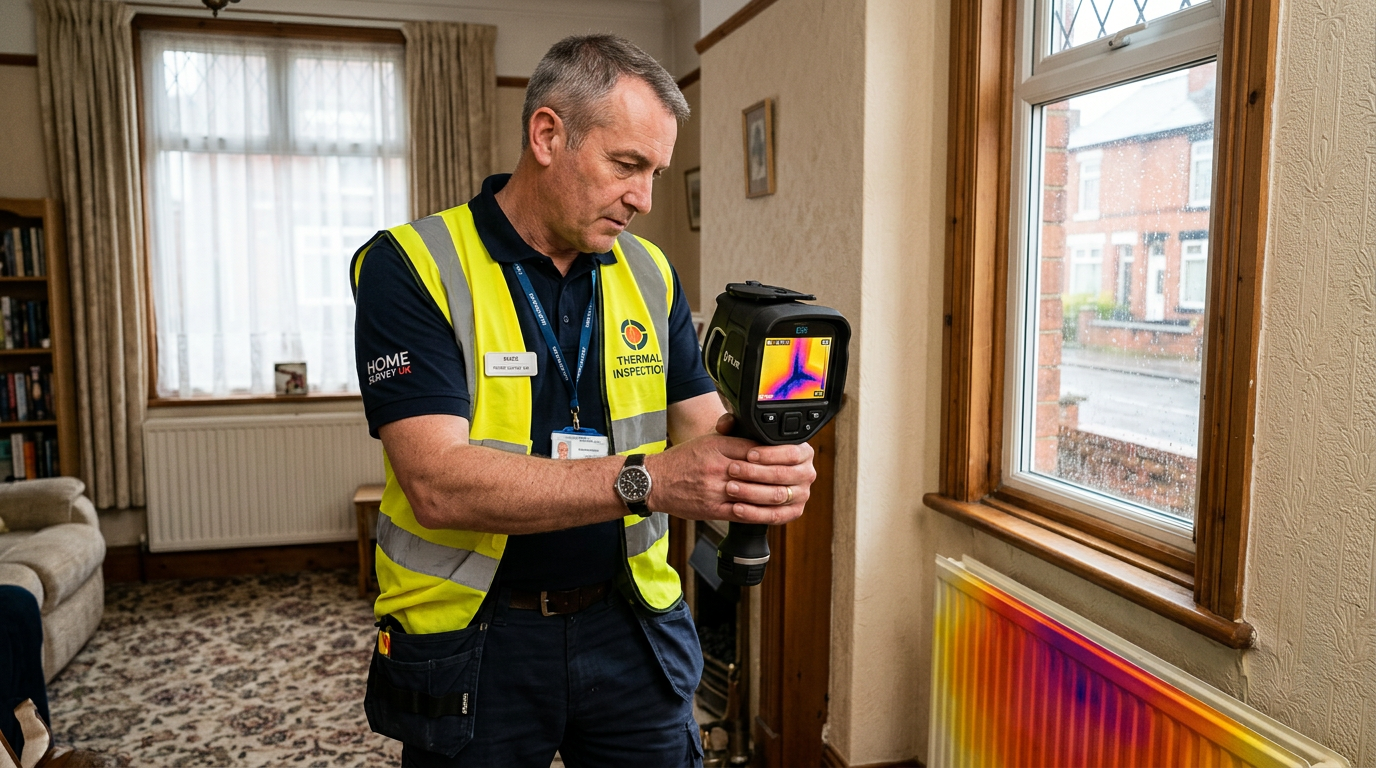
When our RICS surveyors carry out a building survey in Watford, damp checking is a key part of the inspection. We use a calibrated electronic moisture meter to test wall surfaces throughout the property. A reading above around 18–20% moisture content in plaster typically indicates a damp issue warranting further investigation.
We also carry out a visual inspection looking for the tell-tale signs described above — and we'll check the external fabric of the building (gutters, downpipes, ground levels, render, pointing) for potential causes.
A Case Study: Damp Discovery in a Watford Victorian Terrace
"A client asked us to survey a Victorian terraced house near Watford Junction. It had been freshly decorated — walls painted white, no visible issues. Our moisture meter readings came back very high on the ground floor rear wall: 28–32%. Behind all that fresh paint was significant rising damp. The kitchen extension roof was also leaking into the rear bedroom above. Total remediation cost: approximately £9,500. The client used the survey to renegotiate £12,000 off the asking price — a net benefit of over £2,000 before even moving in." — David Harris, FCIOB
Red Flags to Watch for When Viewing
- Freshly painted or replastered walls — could be concealing damp
- Strong smell of damp or mould when you walk in
- Misty windows indicating excessive condensation
- Dark staining in top corners of rooms (condensation mould)
- Sagging ceilings, especially below bathrooms or flat roof extensions
- Missing or damaged gutters and downpipes (a major cause of penetrating damp)
FAQs About Damp in Watford Properties
Should I pull out of a purchase if damp is found?
Does my survey include a damp check?
Worried About Damp? Book a Survey in Watford
Our RICS surveyors will carry out thorough damp testing as part of every survey. Get peace of mind before you commit.
Related reading: 10 warning signs of structural problems | Level 2 vs Level 3 survey: which do you need? | How to negotiate after a survey