After surveying thousands of properties across Watford, Hertfordshire and the surrounding home counties, our building surveyors have a trained eye for structural red flags. Some are obvious. Others are surprisingly subtle. Here are the ten warning signs we look for in every inspection — and what they could mean for you as a buyer.
🔑 Key Takeaways
- Not all cracks are serious — but some are. Understanding the difference matters.
- Structural problems in Hertfordshire's older housing stock are common but not always expensive
- A RICS Level 3 Building Survey is the best way to assess structural risk
- Never ignore warning signs during a viewing — always get a professional opinion
1. Diagonal Cracks from Window and Door Corners
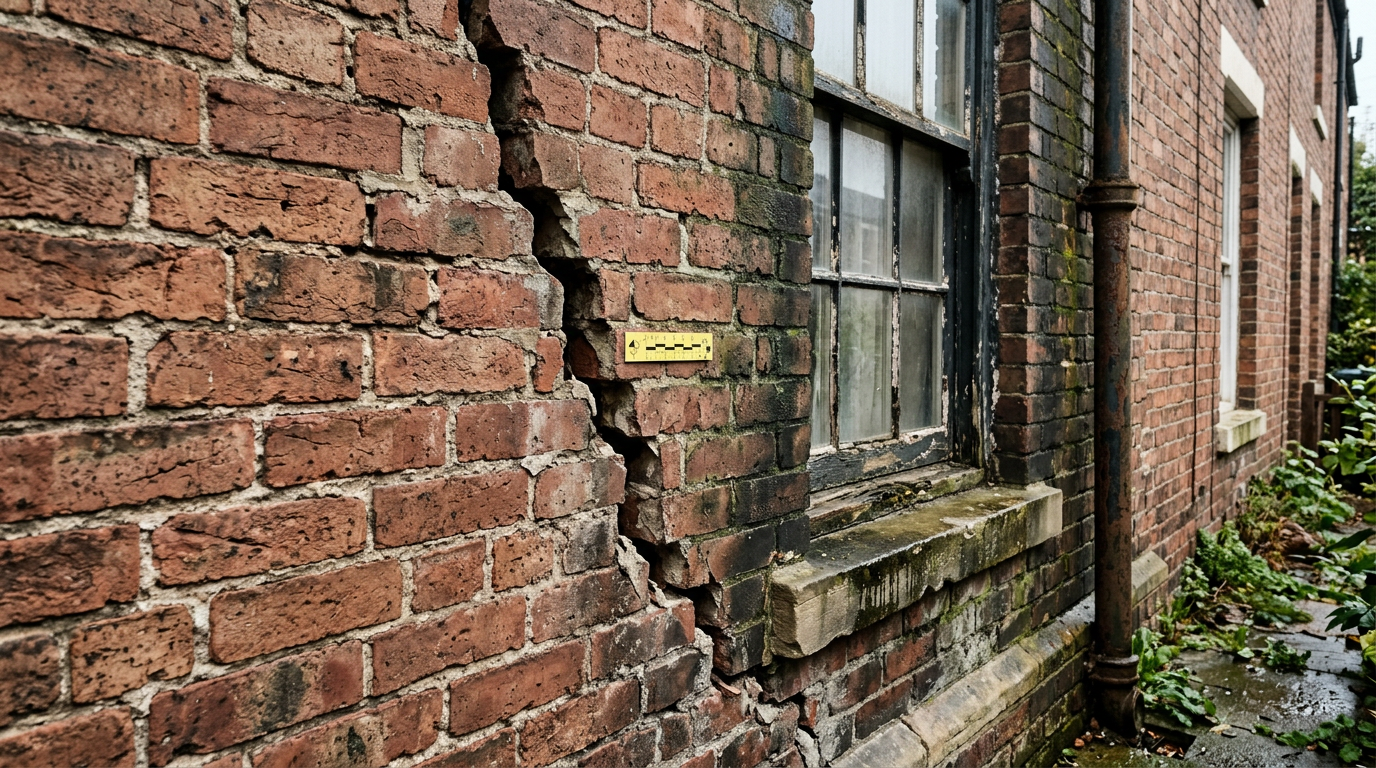
Stepped or diagonal cracks running from the corners of windows and doors are one of the most telling signs of differential settlement — where one part of the building has moved differently from another. In many cases this is historic movement that has now stabilised, but it warrants careful investigation. We use crack monitors and review any available structural reports before drawing conclusions.
2. Doors or Windows That Stick or Won't Close Properly
If doors or windows stick, drag, or won't latch properly, it's often because the frame has been distorted by movement in the surrounding structure. A single sticking door might just be seasonal timber swelling. Multiple sticking doors and windows — particularly if they follow a pattern — can indicate significant structural movement.
3. Sloping or Uneven Floors
Some degree of unevenness in floors is normal in older properties — Victorian and Edwardian homes in Watford and Hertfordshire weren't built to the tolerances of a modern house. But significant sloping, or floors that bounce or flex underfoot, can indicate failed joists, wet rot, insect infestation or movement in the supporting walls.
4. Bowing or Bulging Walls
When an external wall bows outward — particularly at the top — it often indicates that the wall ties between the inner and outer leaves of a cavity wall have corroded and failed. This is particularly common in properties built between approximately 1920 and 1975. Wall tie failure is a serious issue but is fixable, typically costing £3,000–£10,000 depending on severity.
5. Horizontal Cracks in Mortar Joints
Horizontal cracks running through the mortar joints of brickwork (rather than through the bricks themselves) are often associated with wall tie failure or lateral movement. This is different from the more benign vertical or stepped cracks that appear as a result of normal thermal movement.
6. Visible Roof Spread or Sagging Ridgeline
Looking at the property from outside, a roofline should be straight and level. If the ridge sags in the middle, or if the roof slopes in a way that suggests the walls beneath are pushing outward, this is a sign of roof spread — where the weight of the roof is forcing the supporting walls apart. This can be a costly repair involving structural engineers and new structural timbers.
7. Damp Patches That Follow Structural Lines
Not all damp is a structural issue, but when damp patches follow the line of structural elements — along the base of walls, tracking a joist line on a ceiling, or spreading from a chimney breast — it can indicate that structural movement has created pathways for water ingress. Always investigate the cause rather than assuming it's simple penetrating damp.
8. Cracks in Chimney Stacks
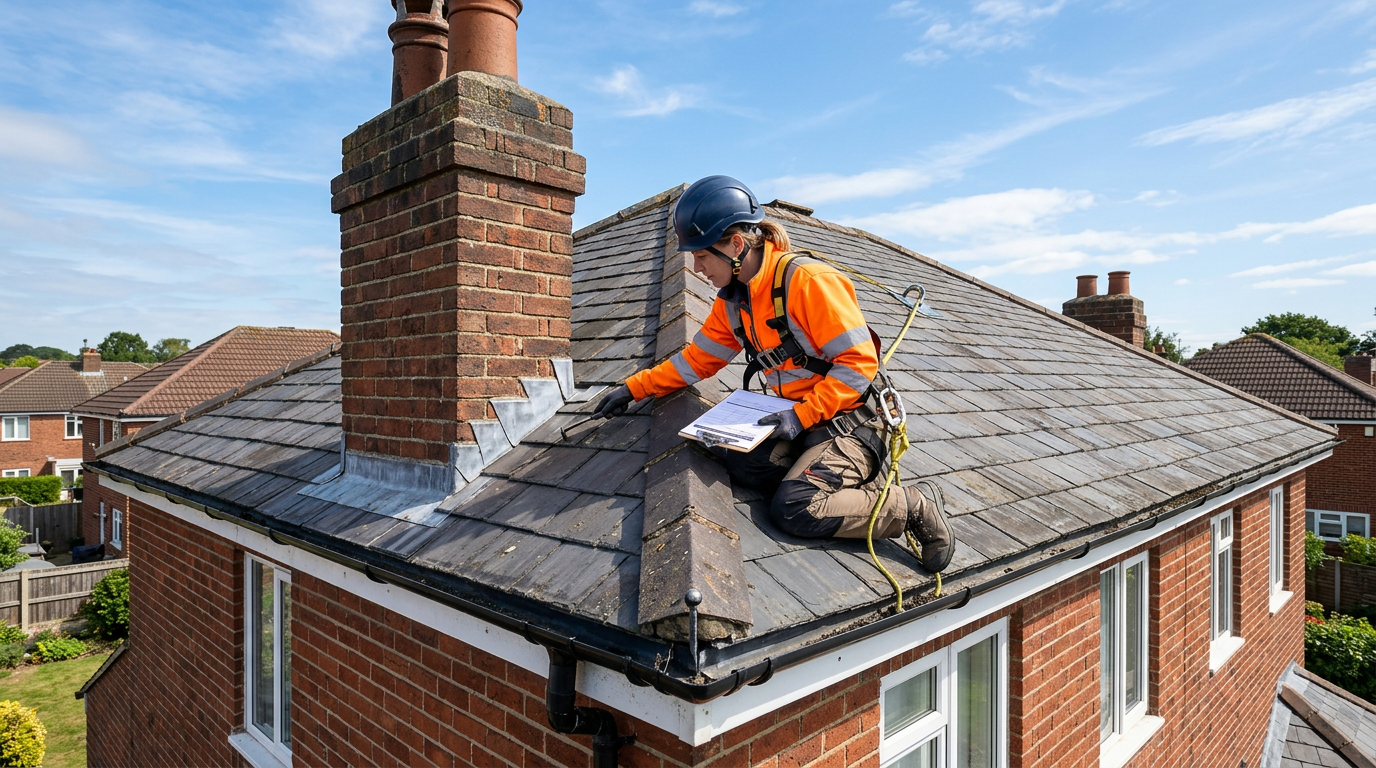
Chimney stacks on Victorian and Edwardian properties in Hertfordshire are frequently neglected and can develop significant movement cracks. These become serious when the chimney stack is at risk of falling — an obvious safety hazard. Always check chimney condition during a survey, particularly on older properties.
9. Signs of Previous Underpinning
Underpinning is the process of strengthening a building's foundations — typically because of subsidence. Signs include exposed concrete at the base of external walls, different types of brickwork at low level, or disclosure in the property information form. While underpinning doesn't automatically rule out a purchase, it requires very careful investigation and specialist insurance cover.
10. Inadequate Support for Extensions and Alterations
Many properties in Watford and Hertfordshire have been extended over the decades — kitchen extensions, loft conversions, garage conversions. These are often done without proper structural design, resulting in inadequately supported beams, missing padstones, overloaded lintels and blocked load paths. This is particularly relevant for interwar and post-war properties where DIY building work was common.
What to Do If You Spot These Warning Signs
Don't panic — and don't dismiss them. The right course of action is almost always to instruct a RICS Level 3 Building Survey before proceeding. Our building surveyors will assess the severity of any structural issues, advise on the likely cause, recommend specialist investigations where needed and give you an honest view of the implications for your purchase decision.
"The worst outcome isn't a survey that finds problems — it's a survey that misses them, or a buyer who never bothered to get one."
— David Harris, FCIOB, Watford Surveyors
Worried About a Property's Structure? Talk to Our Surveyors
Our RICS Level 3 Building Survey is specifically designed to uncover structural issues in older and larger properties across Watford and Hertfordshire.
Related: Damp in Watford homes | Level 2 vs Level 3 survey | Negotiating after a survey